
Mission
Our mission at Arthritis Rewind is to provide free education for people with arthritis -funded by donations- so they can improve function and reduce pain in under a month.
Patients With Arthritis by The Numbers
350M
Worldwide
54M
U.S.
1 in 5
U.S. Adults
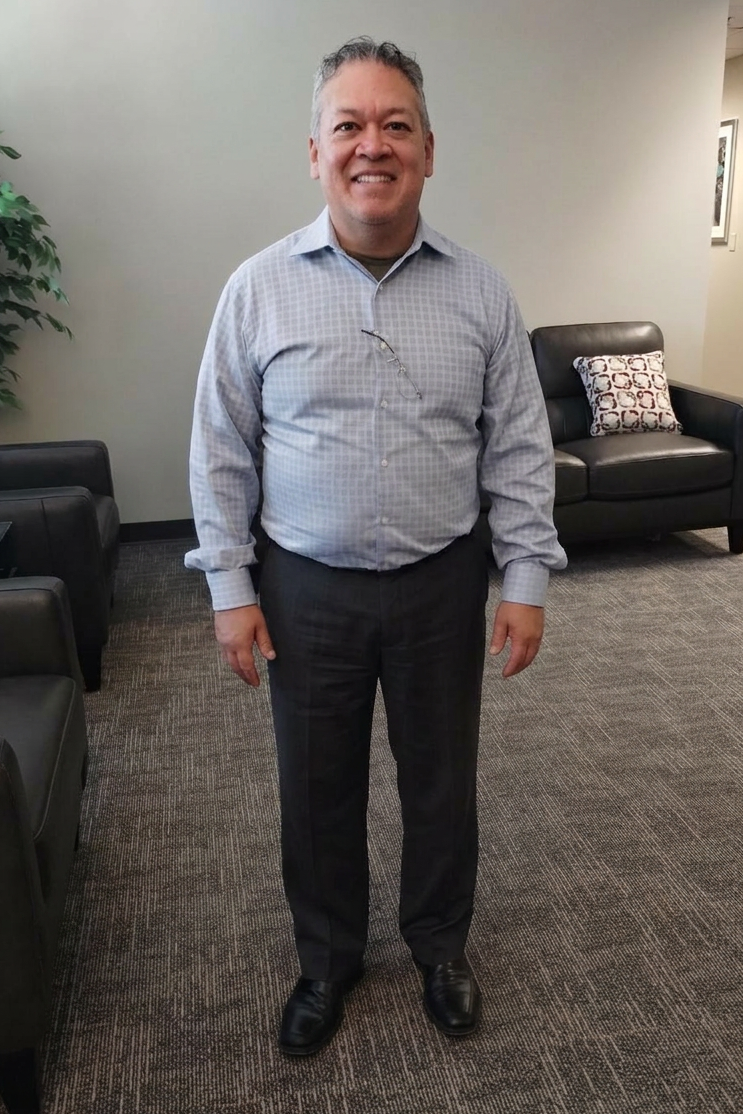
Luis Lopez, MS
Founder & CEO
As a previous arthritis patient with severe disability I know exactly how painful and disruptive this disease can be to your life. I had lost my independence and felt scared. My new purpose in life became to find a way to reverse my arthritis. Now I feel an obligation to share my findings with every arthritis patient.
Niacin and Osteoarthritis: Research Collaboration Opportunities for Institutions
The research plan below was submitted to USUHS, and your institution is welcome to run their independent study for large scale validation and without the constraints of government funded/timed research.
However, my personal experience with targeted niacin dosing of 100mg and timing of 4-5 times/day for 12 weeks suggests a safe, highly promising, yet scientifically untested approach to arthritis management that may transform care if validated via a rigorous clinical trial. The long-term goal of this research is to find an effective treatment for osteoarthritis that significantly reduces pain and improves function.
The objective of this proposal is to conduct a pilot feasibility trial of a standardized niacin regimen versus placebo in adults with osteoarthritis and to assess its impact on pain and functional recovery. The central hypothesis is that scheduled, specific-dose niacin administered at controlled intervals and timed relative to meals will be safe and significantly reduce osteoarthritis pain, functional limitations, and excess bone growth compared with placebo, and that this benefit will be durable with continued adherence. The rationale is that sustained levels of niacin in the blood at the right dose throughout most of the day may provide the body with sustained and necessary nutrients to reverse osteoarthritis.
Aim 1. To conduct a Pilot, Randomized Control Trial (RCT) of a standardized niacin regimen versus placebo in adults with spinal osteoarthritis. The objective of this aim is to recruit a group of 30 adults with moderate to advanced, age-related osteoarthritis of the spine. Participants will be randomized to receive niacin (100mg; n=20) or placebo (n=10). To help prevent flushing, the first dose will be taken 1 full hour after the first meal. Subsequent doses will be taken every 3 hours until sleep time (4-5 doses/day). Treatment with niacin/placebo will be continued daily for 12 weeks.
Sub-aim 1a: Impact on disease progression: A baseline X‐ray will be taken of the area affected by osteoarthritis. Subsequent imaging will be performed every 4 weeks until the end of the intervention (12 weeks) to assess osteoarthritis progression. This will be the primary outcome of the RCT.
Sub-aim 1a: Impact on disease progression: A baseline X‐ray will be taken of the area affected by osteoarthritis. Subsequent imaging will be performed every 4 weeks until the end of the intervention (12 weeks) to assess osteoarthritis progression. This will be the primary outcome of the RCT.
Sub-aim 1b: Impact on pain: Pain intensity as a secondary outcome will be assessed using a Numerical Rating Scale (NRS) where patients verbally choose a number from 0 to 10, with 0 meaning "no pain" and 10 representing "worst pain imaginable". Pain questionnaires will be repeated every 4 weeks until the end of the 12-week intervention.
Sub-aim 1c: Impact on functional status: Functional status, another secondary outcome, will be assessed at baseline using the commonly used performance-based measures - Timed Up and Go (TUG) test and the 30- second chair stand both without assistive devices. Functional status assessments will be repeated every 4 weeks and at the end of the 12-week intervention.
Sub-aim 1d: Safety and Compliance: Education with teach-back demonstrations will be provided to the participants on how niacin flushing works and how to prevent it. Monthly communication will monitor compliance and safety issues as secondary outcomes of the trial. The Primary Investigator (PI) will review any adverse events reported and the therapy for any patient may be stopped if needed. Patients with lack of compliance history and/or dementia will be excluded from the study. Compliance will be assessed by counting tablets at monthly intervals until the completion of the study.
Impact: The expected outcomes of this research project are to demonstrate the preliminary beneficial effects of niacin, a highly beneficial, low-cost arthritis intervention, to significantly reduce pain and disability for people with spinal osteoarthritis and lay the foundation for a future, fully powered study. This niacin–arthritis research has the potential to advance the arthritis field, especially improving care in Military Medicine for the benefit of the nation’s warfighters, veterans, and civilians alike. If confirmed, this therapy could be rapidly implemented, including in resource-limited settings and could shift the field toward effective arthritis improvement. POC: Luis Lopez, MS.
Lau EM, Lin F, Lam D, Silman A, Croft P. Very low prevalence of hip osteoarthritis among Chinese elderly in Beijing and comparison with hip osteoarthritis in whites in the United States. Arthritis Rheum. 2002;46(7):1773‐1779. doi:10.1002/art.10332.
Mathew AJ, Ravindran V. Infections and arthritis. Best Pract Res Clin Rheumatol. 2014;28(6):935‐959. doi:10.1016/j.berh.2015.04.011.
Office of Dietary Supplements, National Institutes of Health. Niacin: Health professional fact sheet. Updated November 18, 2022. Accessed January 26, 2026.
References:
Lau EM, Lin F, Lam D, Silman A, Croft P. Very low prevalence of hip osteoarthritis among Chinese elderly in Beijing and comparison with hip osteoarthritis in whites in the United States. Arthritis Rheum. 2002;46(7):1773‐1779. doi:10.1002/art.10332.
Mathew AJ, Ravindran V. Infections and arthritis. Best Pract Res Clin Rheumatol. 2014;28(6):935‐959. doi:10.1016/j.berh.2015.04.011.
Office of Dietary Supplements, National Institutes of Health. Niacin: Health professional fact sheet. Updated November 18, 2022. Accessed January 26, 2026.